Inventory · 3 min read
How to import a big liquor catalogue without a week of typing
A practical guide to importing a liquor store catalogue: cleaning the file, one row per bottle size, UPCs, case units, categories, costs, opening stock and updating prices later.
By Retail Operations Desk · Published · Updated
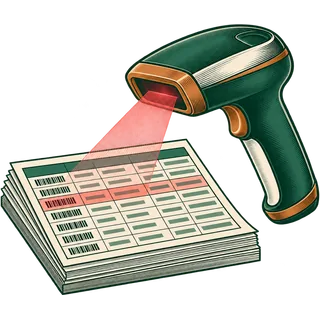
To import a large liquor catalogue, start from the cleanest file you have (your old POS export or distributor price files), keep one row per bottle size with its UPC, set cases as units rather than separate rows, map columns to name, price, unit, barcode, category and cost, fix what the preview flags, and import in batches of about 5,000 rows. Then spot-check at the register before opening stock is loaded.
Key takeaways
- One row per bottle size; cases and packs are units of that row.
- The UPC is the key that keeps future price updates clean.
- Bring cost on day one, or profit reports start wrong.
- Count before you load stock; never trust the system you are leaving.
Step 1: Choose your source file
In order of preference:
- Your current POS export. It has your prices and usually your barcodes. Export products to CSV.
- Distributor price files. Good UPCs, sizes and costs; add your selling prices.
- A spreadsheet you keep. Fine, if it has barcodes.
If you have more than one source, pick one as the base and merge the others into it by UPC.
Step 2: One row per bottle size
The most common mistake in liquor catalogues is mixing sizes and packs. Use this rule:
- Different size = different product. A 750 ml and a 1.75 L of the same bourbon are two rows.
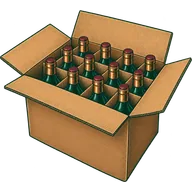
- Different pack of the same size = a unit. A case of twelve 750 ml bottles is a unit of the 750 ml row, not a new row.
| Row | Name | Unit | Case size |
|---|---|---|---|
| 1 | Bourbon 750 ml | Bottle | Case = 12 |
| 2 | Bourbon 1.75 L | Bottle | Case = 6 |
| 3 | Lager 12 oz can | Can | Six = 6, Case = 24, Rack = 30 |
Step 3: Clean the columns that matter
Required: name, selling price, unit.
Strongly recommended:
- UPC/EAN. Check for duplicates and leading zeros (spreadsheets love to strip them; format the column as text).
- Category › sub-category. Keep it shallow: Spirits › Bourbon, Wine › Red, Beer › Craft. Age prompts and reports work by category.
- Cost. Without it, profit and stock-value reports are wrong from the first day.
Useful: brand, size, ABV, image URL, supplier.
Step 4: Map, preview, fix
In Bottle Shop POS, the importer asks you to match each column to a field and remembers the mapping. The preview checks every row before anything is written:
- Duplicate barcodes
- Missing prices
- Categories that do not exist yet (create them, or fix the spelling)
- Units that do not match your unit list
Fix in the file and re-upload, or let the importer create missing categories. Then import. Keep batches to about 5,000 rows so a problem in row 4,812 does not cost you the whole file.
If you prefer, send the file and we import it for you, free. See barcode catalogue import and the guide Import products from a CSV.
Step 5: Spot-check at the register
Before loading stock, scan twenty random products: bottles, cases, a six-pack, something without a barcode. Check the name, the unit and the price. Ten minutes here saves days of corrections.
Step 6: Count, then load opening stock
Do not import stock figures from the system you are leaving unless you counted recently. Count section by section (after close works), then load the counts as opening stock per store. From that moment, every sale, delivery and adjustment moves stock correctly.
Step 7: Keep it clean afterwards
- Price updates: re-import distributor files with UPC as the key and only cost and price columns.
- New products: add them at receiving, with the barcode scanned from the bottle.
- Labels: print shelf tags from the list of changed products after every price update.
How long it really takes
For a clean 9,000-row export, mapping and preview take under an hour and the import itself minutes. The slow part is fixing data: duplicates, missing sizes, odd categories. Budget an afternoon for a messy file, or hand it to us.
Summary
Start from your best file, one row per size, cases as units, UPCs as text, categories shallow, costs included, batches of 5,000, spot-check, count, then load stock. The catalogue you import is the foundation of every report you will read for years.

Written by
The onboarding team's writing desk: case units, catalogue imports, mix-and-match rules and multi-store stock.
Writes from hands-on catalogue imports and register setups done by the onboarding team